





Public Domain Game Jam
Design a game using a work that entered the public domain in 2019
Deadline: Jan. 31, 2019
Tips & Resources for Board Game Designers
Public Domain Game Jam
Design a game using a work that entered the public domain in 2019
Deadline: Jan. 31, 2019
The requirement for the January 2019 24-hour contest is “pitchfork”:
https://boardgamegeek.com/thread/2124406/24-hour-contest-january-2019
Our huge annual roundup of great board game design links and quotes is here!
featured:
Meaningful Decisions: J. Alex Kevern on Design Choices in World’s Fair 1893
Meaningful Decisions: Benoit Turpin on Design Choices in Welcome To...
Meaningful Decisions: Bruno Cathala on Design Choices in Kingdomino
theory:
A board game critic’s view of what makes a game memorable (video)
A discussion of “soft” and “hard” incentives in game design (audio)
A discussion about the assumptions we make about games—and how to design games that challenge them (audio): Part 1, Part 2
“What is the goal of your game? It’s impossible to make decisions in the void, but if you know your audience, your game’s weight, the focus of the decisions, and the tone of your game (your goals), you can use that to hem in your decision.” - Grant Rodiek
process:
Ideas aren't worthless: the important role they play in making a game
A thread offering ways to foster ideas and innovation in your designs
Tips for researching games that might be similar to your design (audio)
“Who are you designing your game for? You? Go wild with weird mechanics. Friends? Listen & tune the game to suit them. A publisher? Learn to pitch a product to a business - you’re B2B. The world? It’s a product in the market that you will need to sell.” - Emma Larkins
“The more I create, the more I develop the skill of persistence. I see people ‘give up’ so easily, convinced that a problem is unsolvable, resigning themselves to a flaw in their work that they see as unavoidable. With very rare exceptions, there’s ALWAYS a solution. Find it.” - Peter C. Hayward
rules:
Rulebooks that nail it—a BoardGameGeek designers forum discussion
“Don’t blame the reader for misreading the rule book. Ask how you can improve the rule book.” - Dr. Wictz
prototyping:
playtesting:
Ways to get people to playtest your prototype: from designer groups to print-and-plays to conventions and more (audio)
licensing:
The essential elements of pitching your design to a publisher (audio)
Questions you should ask yourself before submitting a game to a contest or publisher
Charlie Hoopes on the design process, finding a publisher, recovering from disappointment, replayability, playtesting early and often, and more
“If I ask ‘What makes your game different from other games of the same theme and weight?’ and you can’t answer me? don’t make the game.” - Avonelle Wing
publishing:
Board game fulfillment logistics, and companies that do the work
A Kickstarter "launch sequence": the steps to take immediately after launching a project
How to make a budget for a Kickstarter board game project (video)
contests:
industry:
Cardboard Edison is supported by our patrons on Patreon.
ADVISERS: Rob Greanias, Peter C. Hayward
SENIOR INVENTORS: Steven Cole (Escape Velocity Games), John du Bois, Chris and Kathy Keane (The Drs. Keane), Joshua J. Mills, Marcel Perro, Behrooz "Bez" Shahriari, Shoot Again Games
JUNIOR INVENTORS: Ryan Abrams, Joshua Buergel, Luis Lara, Neil Roberts, Jay Treat
ASSOCIATES: Dark Forest Project, Stephen B. Davies, Marcus Howell, Thiago Jabuonski, Doug Levandowski, Nathan Miller, Mike Sette, Matt Wolfe
“When you write a rulebook, explain the goal, then explain how I reach the goal. If you tell me all the things I can do but not why I want to do them, it’s confusing.”
Notes on pick-and-pass drafting games:
“Always print things out before ordering the prototype copy; it’s much cheaper and faster to find out you can’t read something at home, than on the expensive copy!”
“If you’re making a game, be sure to ask yourself: Who is this game for? Who will buy it? Who will play it? Then make the game work for those folks. If you can bring in other groups, that’s great, but if something isn’t working, find your core audience and aim for them.”
“It’s easy to focus on negative reviews and comments, especially on places like BGG. Remember to read the positive things too - it will remind you that your games and enjoyed by someone!”
“Research before you pitch! When a publisher takes the time to post to their website what they want and what they are not interested in, read and heed before you pitch to them!”
Ways to counteract first-player advantage:
In The Process, board game designers walk us through the process of creating their game from start to finish, and how following their path can help others along theirs.
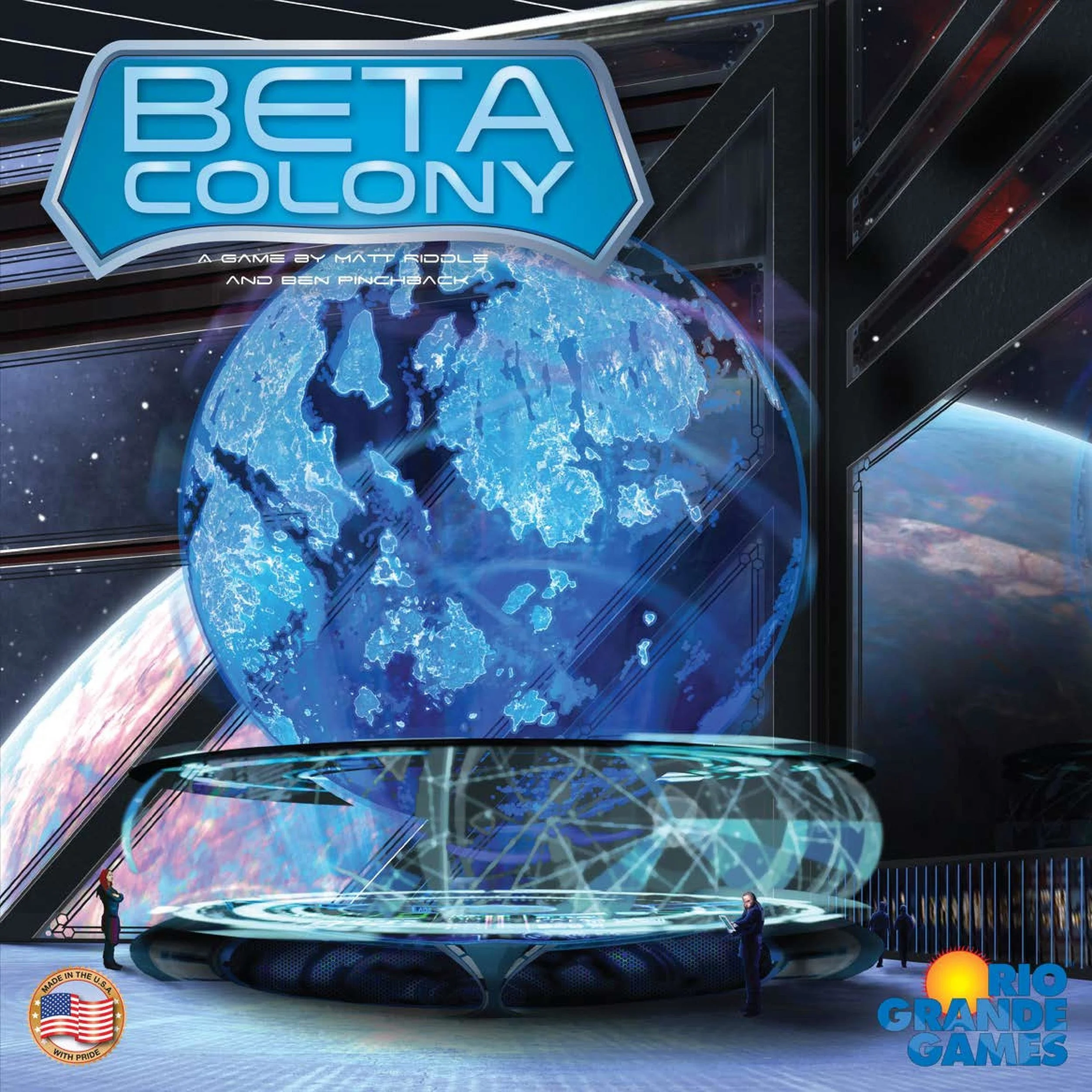
In this installment, Matt Riddle describes how he and Ben Pinchback created Beta Colony, including merging designs, using a new mechanic, upgrading prototypes, failing fast, and more.
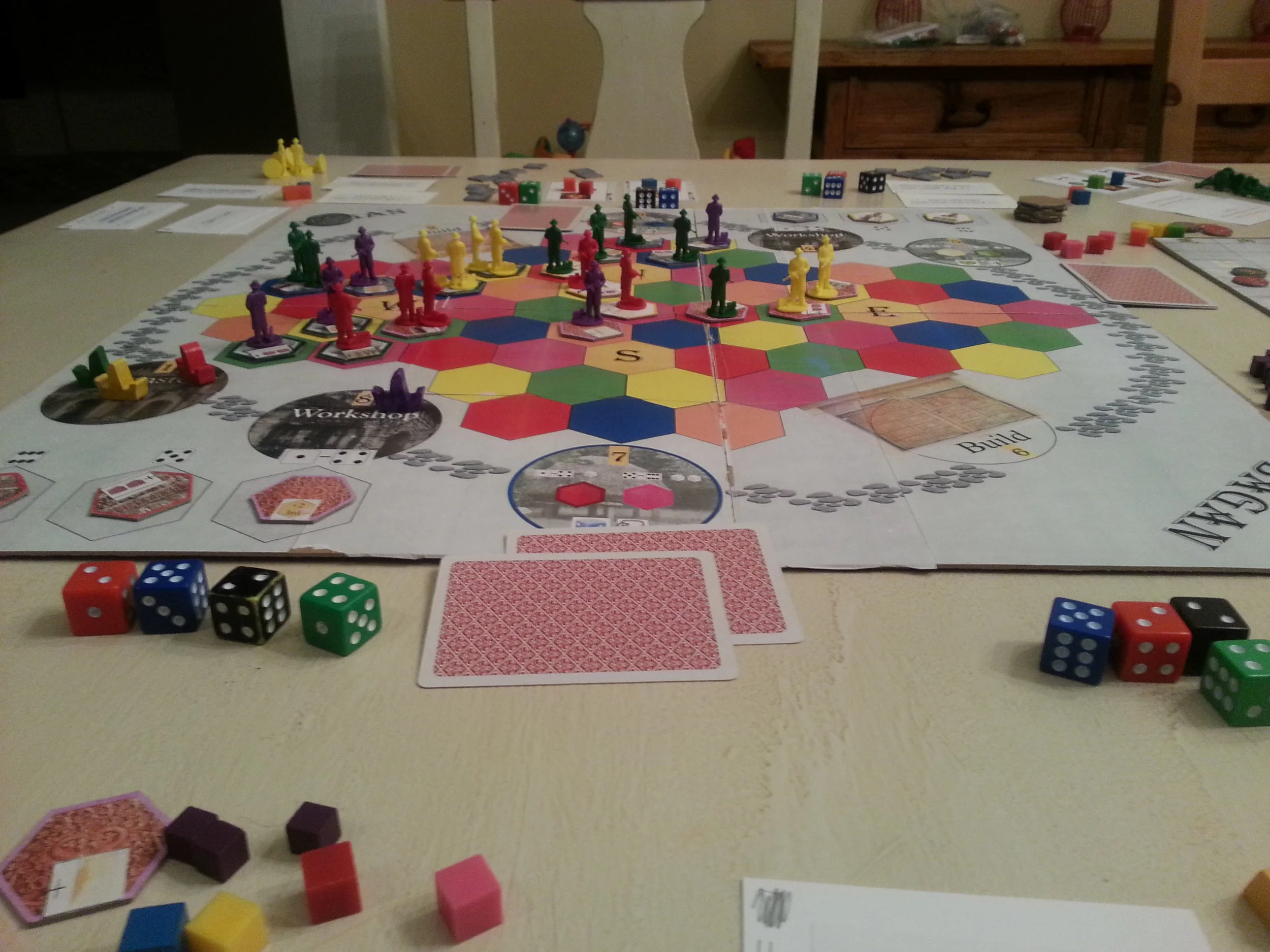
Our process is pretty consistent across every design. Make it and break it as quickly as possible.
Beta Colony started over four years ago as a game about monks building temples in ancient Bagan. Turns out monks are not a theme that people immediately grab on to. It had a clever but very dry tile placement mechanic that still exists in a modified form in Beta Colony. Thanks to some great feedback from Unpub 4, we began working it to make it less dry and not as focused on the tile laying, but instead having that become the primary scoring/euro thing but with a whole new resource acquisition mechanic and focus.
We were working on a game called Space Vikings 2.0, which featured our “roldel.” (More below! And a random side note: Space Vikings 1.0 is now Wasteland Express Delivery Service!) We saw an opportunity to merge the good stuff from two active projects into one and did it.
We pitched it at Origins to Rio Grande Games and they went, “What about space?” That was funny since half its DNA was a space game, so we did. After a year of development, the game was better and comes out late 2018.
The Takeaway: Fail fast. I know that is a business-y buzzword, but it holds true for our design process. Get an idea into alpha test as quickly as possible. If it’s good, work at it. If it is not, move on to the next one.

Mechanically, it our first published use of what Ben and I call our “roldel” mechanic. The basis is simple: Use dice to move pawns around a rondel to select actions/cards/stuff. It is simple but fun and can be twisted in several ways. For Beta Colony, the start player rolls four dice and all players match that roll. Each turn, players use two dice to take an action—one die to move around the rondel, another to activate where you land. That was the basis for Beta Colony: Move around the rondel, gather resources, and use those resources to build tiles (colony buildings) on the planet. It is a relatively simple base goal. Granted, there are tile bonuses, special buildings, VP tracks, and more going on, but the base goal is simple.
That wasn’t always the case. Beta Colony suffered from design barnacles. Good ideas that worked and were even thematic, but only added length, not depth. We worked with the Rio Grande Games developer Ken Hill, to “Knizia” (i.e., streamline) Beta Colony into a 75-minute thematic euro with an engaging dice puzzle to solve each turn, and good, tight decisions.
The Takeaway: Knizia your designs. Find what the fun is, and more importantly, what is actually needed. Get rid of the rest.
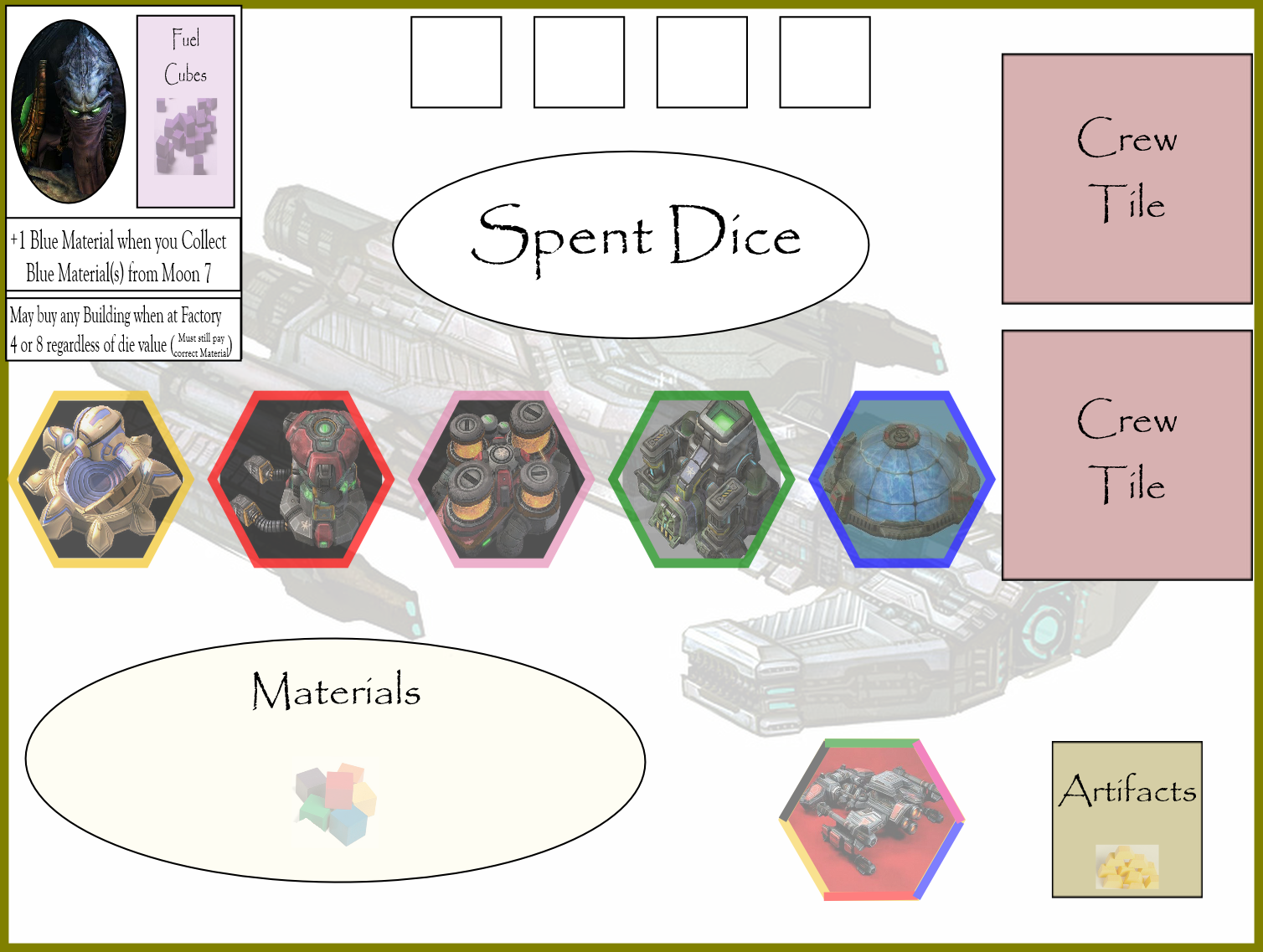
If you follow Ben or me on Twitter, you know that our working protos are famously bland. We spend a good chunk of design working with black-and-white, pencil-covered, ugly protos. When we are finally ready to show it to anyone else, that proto turns into an alpha—which means art stolen from the google and DeviantArt, game icons from game-icons.net, laid out poorly by me in a graphic-design program that is worse but cheaper than InDesign or sometimes PowerPoint even.
Ben and I both have bit bins, so we dig into those for pieces. Tiles are full-page labels stuck to medium-weight Grafix chipboard and cut out with my awesome paper cutter. Pro Tip: Buy a good paper cutter. Unless you are an X-Acto Knife cyborg and can freehand everything, a good paper cutter is key.
Beta Colony has a very large board. Boards are hard. They can be made with chipboard using packing tape to act as the seam. Another option is to have it printed poster-size at Staples. I have done that once; it was expensive but looked great.
The Takeaway: Full-page labels make everything easier.
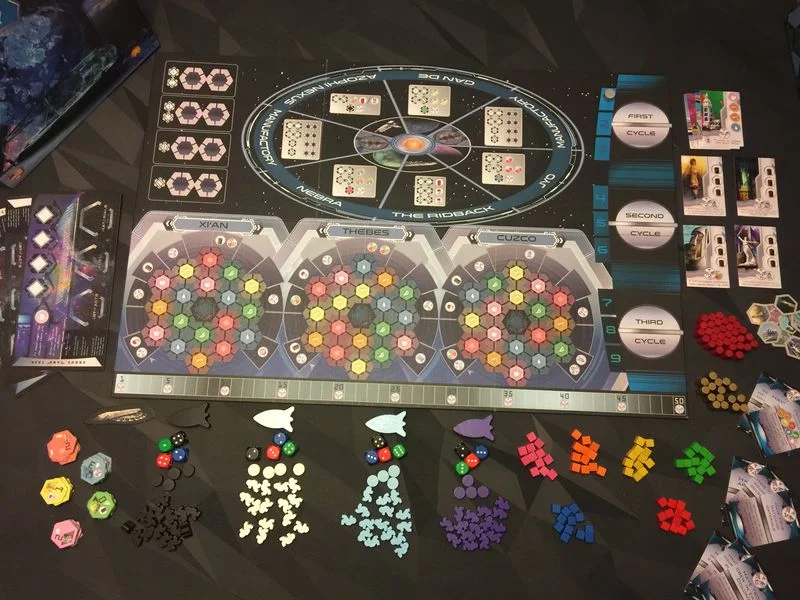
Make it and break it, be quick to fail, pick your buzzword. Make a proto as soon as there is a game to play and see if it works. If it does, play it 500 times. If after that it still works, then try and get someone that isn’t you to play it. That is difficult, so use conventions and designer meetups.
The Takeaway: Design with a partner. Blind testing is important, but the umpteen reps that happen before a game is ready for blind testing is invaluable.
Matt Riddle and Ben Pinchback have over 15 published games to date, including Fleet, Piepmatz, and Wasteland Express Delivery Service, to name a few.
Cardboard Edison is supported by our patrons on Patreon.
ADVISERS: Rob Greanias, Peter C. Hayward
SENIOR INVENTORS: Steven Cole (Escape Velocity Games), John du Bois, Chris and Kathy Keane (The Drs. Keane), Joshua J. Mills, Marcel Perro, Behrooz "Bez" Shahriari, Shoot Again Games
JUNIOR INVENTORS: Ryan Abrams, Joshua Buergel, Luis Lara, Neil Roberts, Jay Treat
ASSOCIATES: Dark Forest Project, Stephen B. Davies, Marcus Howell, Thiago Jabuonski, Doug Levandowski, Nathan Miller, Mike Sette, Matt Wolfe
The anatomy of a Kickstarter page:
http://rockmanorgames.com/2018/12/18/the-anatomy-of-a-kickstarter-page/
How to explain your game differently based on the audience: a publisher, a playtester, or a gaming stranger (video)
A discussion of “ludonarrative dissonance,” or a disconnect between a player’s experience and expectations (audio):
http://ludology.libsyn.com/ludology-episode-190-diabolus-in-ludica
Different methods for setting your Kickstarter funding goal, your stretch goals, and how many updates to make (audio):
http://theforbiddenlimb.libsyn.com/funding-goal-stretch-goals-and-updates-ep-75
How to put together an online playtesting group (audio):
http://www.boardgamedesignlab.com/creating-an-online-playtesting-group-with-daniel-connie-kazmaier/
On the uses of luck and randomness in games:
https://twitter.com/KevinWilson42/status/1074537529121140736
Holiday Design Contest
Design a game with a holiday theme
Deadline: March 18, 2019
Prizes: The Game Crafter shop credit and more
https://www.thegamecrafter.com/contests/holiday-design-contest
A look at games as systems (video)