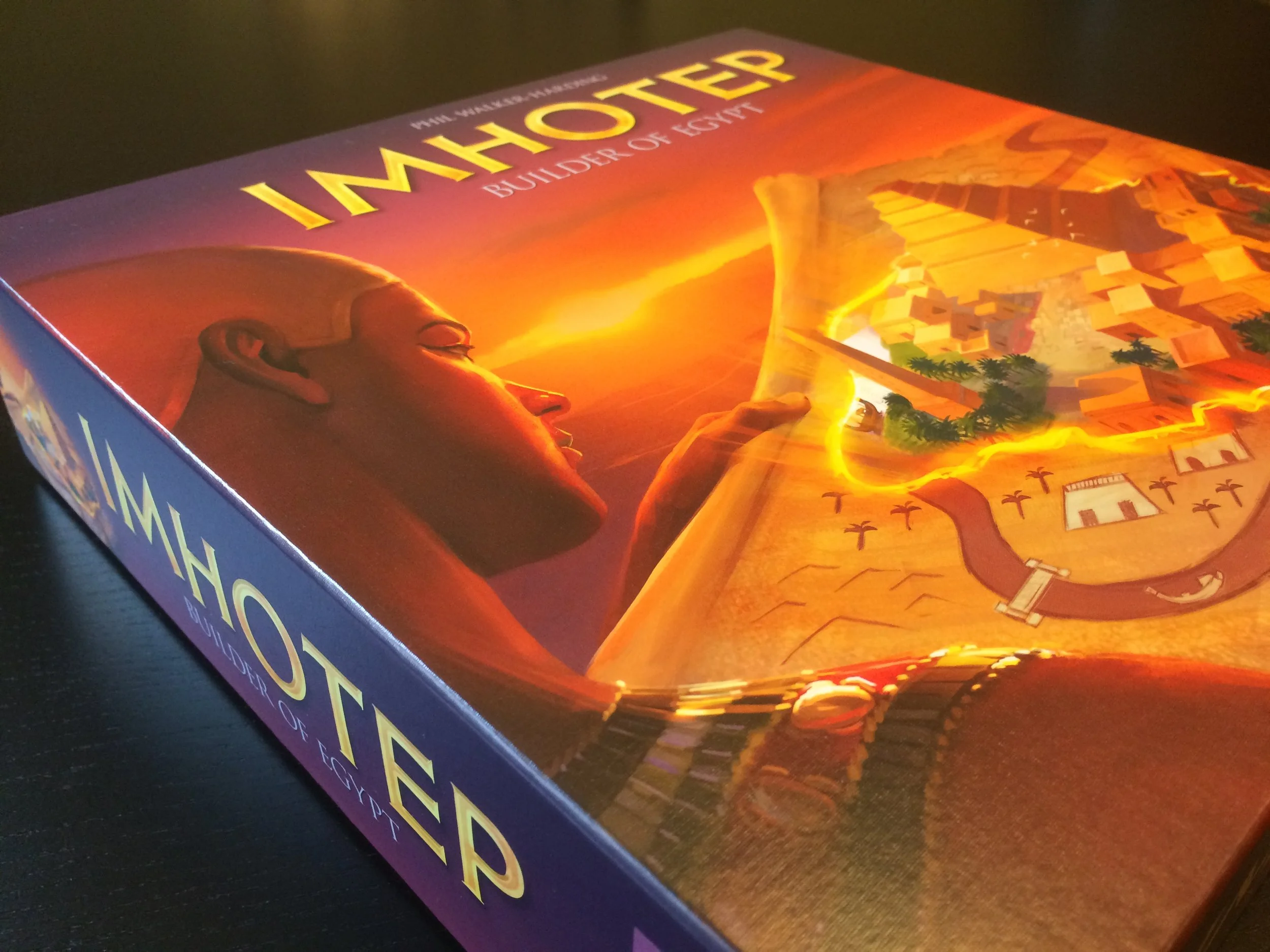
Certain players seem to be attracted to certain sites, each of which awards points or benefits in a different way. One rewards well-timed maneuvers, another is about edging out the competition, another is puzzle-y, and so on. How did you settle on the way the different sites behave? Was appealing to different types of players a conscious decision?
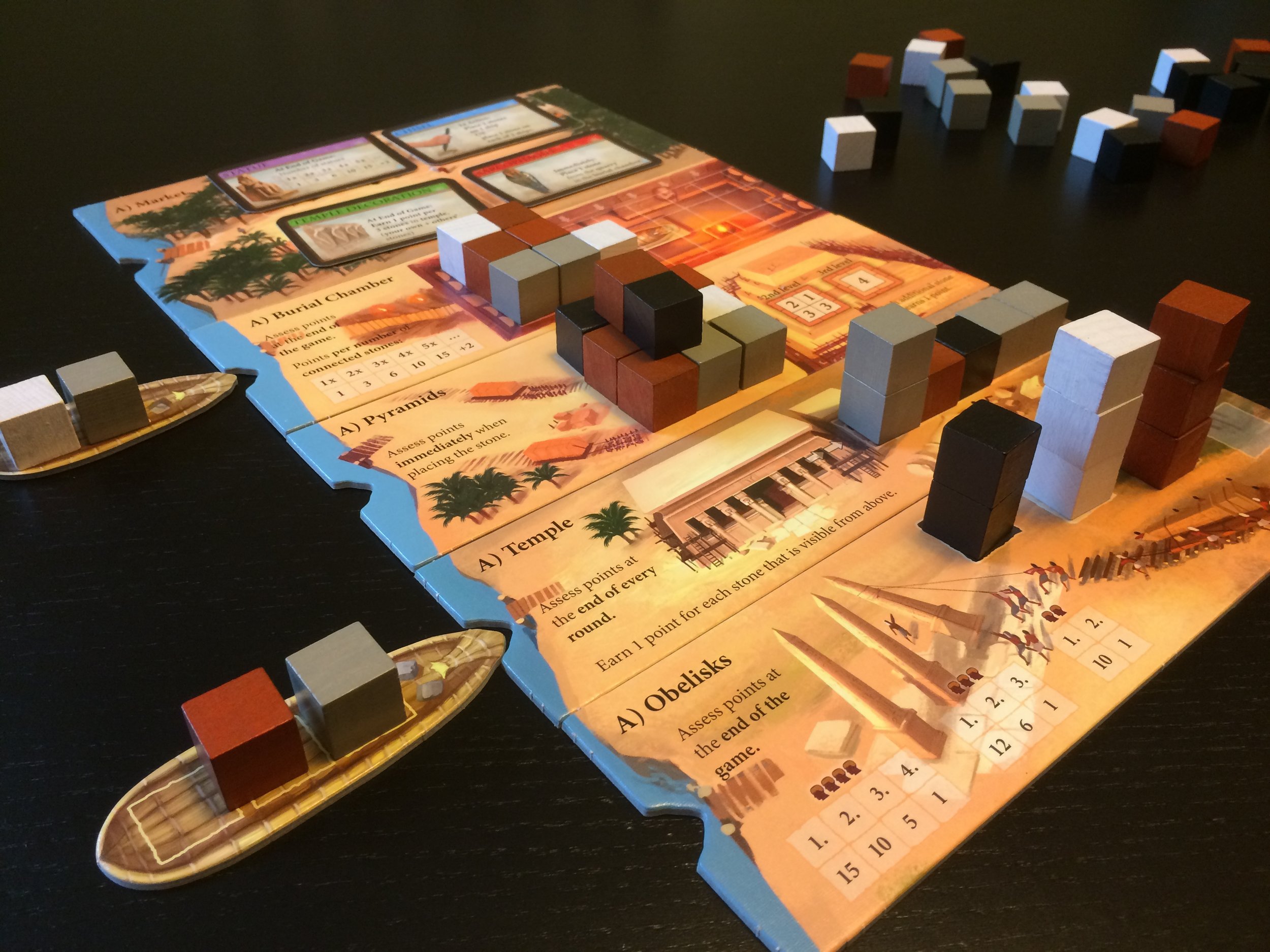
More than appealing to different types of players, I was really trying to make each site feel like a unique and interesting mini-game. So I suppose it makes sense that different players prefer the different styles of mini-games! In the very early stages of the design, the players were just building the pyramids, and straight points were awarded based on the position of each stone. But quite quickly I realised things would be much more interesting with multiple monuments that scored differently. Obelisks came to mind next, and it immediately made sense that they should score based on who had the tallest. The temple was inspired by Arkadia and Blokus 3D, where having your pieces be visible from above is important. I also wanted a site that used spatial connections, and this idea developed into the burial chamber. I have always been very influenced by Reiner Knizia's use of different methods (especially in Ra), and how they can drastically change the whole way you feel about some element of the game. So I am sure the lessons I have learnt from him were also at play as I designed the sites.
Are there ways a designer can make a game that "has something for everyone" by appealing to different types of players? Are there pitfalls to trying to do this?
I think it is really important that a designer has a specific audience in mind during the design process. I think the best way to be broadly appealing is actually to know your audience really well and then try and design a standout game for that audience. This way your game might jump out from the crowd and hopefully be found by other audiences who might enjoy the design. For example, when I designed Sushi Go! I was aiming at those who like quick cute colourful filler card games with just enough decision making to keep older players and even gamers a bit interested. Now that is quite a broad audience, but I did everything I could to hit that mark. I think if I had set out to include "something for everyone", for example some extra planning to appeal to advanced gamers, the design would have lost focus. It can be tempting to put disparate elements into a design in the hope of wide appeal, but I think it usually leads to more muddled designs that don't hit the spot for either audience.