





Lessons from analyzing the Spiel des Jahres winners:
http://opinionatedgamers.com/2016/01/15/sdj-re-reviews-series-conclusion/
Tips & Resources for Board Game Designers
Lessons from analyzing the Spiel des Jahres winners:
http://opinionatedgamers.com/2016/01/15/sdj-re-reviews-series-conclusion/
In this installment of The Publishers, we speak with Michael Coe of Gamelyn Games about building a franchise, going full-time as a publisher, popular themes and more.
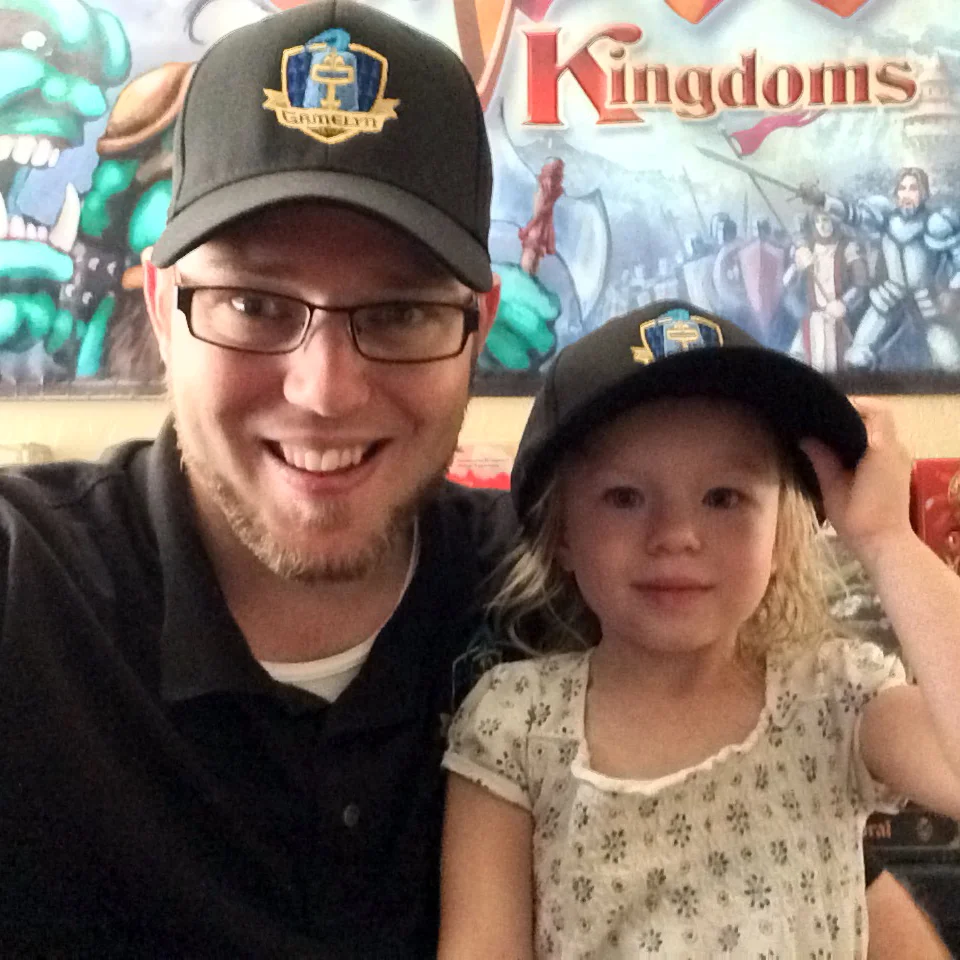
The Tiny Epic series of games has become something of a calling card for Gamelyn Games. How did you settle on this, and what goes into identifying a potential franchise in the gaming industry?
I fell in love… with Tiny Epic. Initially with Tiny Epic Kingdoms, but I quickly saw that there was more to explore there. That Tiny Epic wasn’t just a great name but also a platform. It can expand along an "X" axis with new titles varying greatly in theme and mechanics, and then each game within the series can expand along a "Y" axis with new content. All while staying true to the mantra of “Tiny Epic.” That was very attractive to me as a game producer. I also felt, and recognized in gamers, a desire for short (30-to-60 minute) meaningful games and a lack of said games in the market. And, as a small business, it makes a lot of sense to produce small games. ;)
It was a magical phone call with the designer of Tiny Epic Kingdoms, Scott Almes, that set it all in motion. He didn’t just share my vision, he was simultaneously originating the same aspirations before I called. We both knew at that time that it was inevitable; we were going to make the best series of short meaningful games ever, or die trying!
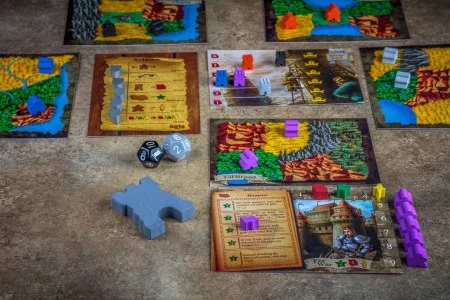
Tiny Epic Kingdoms
You work on Gamelyn full-time, and the company has its first employee, Nathan Hatfield. What has it taken to reach these milestones, and what have you learned about the process of growing a publishing company?
It has taken a lot to get here, and yet we’ve only just begun. To start, it took three years of investing time and effort as if working an every-time job for free; while still making a living at a full-time job. You know, there’s part-time jobs, full-time jobs… and every-time jobs. Meaning every time you have any time, you’re working. After three years, I was able to begin taking a salary. At 3.5 years I was able to hire my best friend.
It has taken a lot of networking. Attending conventions on my dime to meet manufactures, distributors, sales reps, game reviewers, play testers, etc.
It has also taken genuine talent, and therefore many talent searches. I constantly feel like the director of a talent agency, actually. Without the remarkable writings of Scott Almes, and the beautiful art from all the artists who’ve contributed to the series, namely Bill Bricker, Darrell Louder, Ben Shulman and Adam McIver, I’d still be managing a restaurant.
Additionally, a lot of effort has been spent on understanding tax procedures, legalities, royalties, licenses, etc.
Building a publishing company has taught me many things, too many to list, but I will say this: You are only as good as your latest work. So keep refining your process, find ways to improve, don’t settle for average, never say yes to the first offer, and never say never.
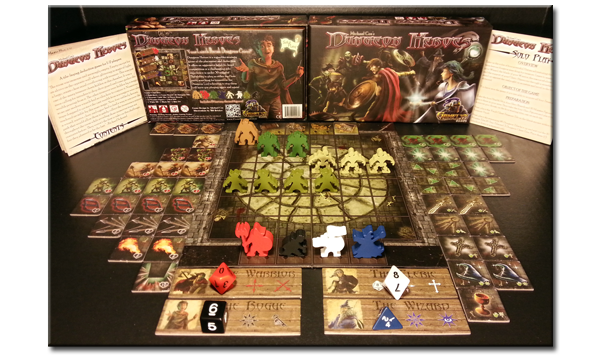
Dungeon Heroes
Gamelyn's catalog has a strong emphasis on fantasy-themed games, though your upcoming titles display a wider range of themes. How important is theme to Gamelyn specifically, and to games more generally?
Personally, I’m a sucker for fantasy themes. That’s why you see as much of it as you do in Gamelyn Games. I have to be really passionate about something to publish it, and fantasy seems to get me there a little easier. That’s not to say that other themes don’t excite me, and regardless of theme, a great game engine trumps it all.
A lot of what I just said also applies to gamers and the games they buy. If someone has a preferred theme, and clearly most people do and it is either sci-fi or fantasy, they are more inclined to buy games of that theme, as they trust it will be easier for them to get in the spirit of the game. While they may be intrigued by other, more niche, themes, it’s just not as immersive to them unless the game is exceptionally well-written. Hence it’s a riskier buy. Hence sci-fi and fantasy games continue to sell like hotcakes and niche-themed games tend to struggle. But the gaming world would be quite boring without niche-themed games, so Jan. 11, 2016, we launched a Kickstarter for the impeccably well-written Tiny Epic Western!
Cardboard Edison is supported by our patrons on Patreon.
SENIOR INVENTORS: Steven Cole, John du Bois, Richard Durham, Matthew O’Malley, Isaias Vallejo
JUNIOR INVENTORS: Stephen B Davies, Luis Lara, Behrooz Shahriari, Aidan Short, Jay Treat
ASSOCIATES: Robert Booth, Doug Levandowski, Aaron Lim, Nathan Miller, Marcel Perro
APPRENTICES: Kevin Brusky, Kiva Fecteau, Scott Gottreu, Michael Gray, JR Honeycutt, Scott Martel Jr., Marcus Ross, Diane Sauer
Using Kickstarter to jumpstart an indie board game company, working with artists and more:
Top 10 things one publisher considers when evaluating a game:
http://blog.foxtrotgames.com/2015/12/02/game-submissions-brand-hook-fun/
http://blog.foxtrotgames.com/2015/12/11/game-submissions-time-excitement-profit/
http://blog.foxtrotgames.com/2016/01/12/game-submissions-top-10-things-i-look-for-part-3/
Considering a game's "virtuosity"--its ability to let players make creative, unexpected moves:
Making a prototype that accomplishes what you need it to at each stage of the process:
http://breakingintoboardgames.libsyn.com/breaking-into-board-games-episode-9
“When designing a game bounce ideas off of other designers, get people to playtest it blindly, make a name for yourself in circles by helping others out as well. Doing this can get you invaluable information that can improve your game and your abilities as a designer.”
Abstraction: ways in which designers can abstract different concepts into their games:
Ways to provide zero-level heuristics--rules of thumb for first-time players:
http://lawofgamedesign.com/2016/01/11/theory-providing-zero-level-heuristics
Tools that designers may use to help increase the novelty of play in their games:
A look at the deck-building mechanism and how it has evolved:
http://ludology.libsyn.com/ludology-episode-119-deck-the-halls
Variations on worker placement:
5 Google spreadsheets to help tabletop game crowdfunders:
http://stonemaiergames.com/5-google-spreadsheets-that-can-help-every-tabletop-game-crowdfunder/
Branding and choosing a name for your game: retail considerations, rebranding, unique names, Google results and more:
http://theforbiddenlimb.libsyn.com/branding-naming-your-game-ep-32
Ways to get around perfectly balancing abilities in a game:
http://www.3dtotalgames.com/the-impossibility-of-balancing-effects-and-what-to-use-instead/
The requirement for the January 2016 24-hour contest is "food":
https://boardgamegeek.com/thread/1500355/24-hour-contest-january-2016
This past year was filled with useful material about every aspect of board game design. We've gathered our favorite links and quotes from the past 12 months in one place. We also added links to all of the interviews, articles and infographics that we produced this year.
As always, we hope you find help and inspiration here.
Thanks, and happy 2016!
~ Chris & Suzanne Zinsli, Cardboard Edison
licensing:
Tips for building relationships with publishers and getting published through the back door
An important piece of advice before signing a publishing contract
Reasons why a publisher might reject a game even if it's very good
“Don’t pitch a game to a publisher until you envision it on the store shelf as-is (design-wise), and are happy with that. Then also don’t be surprised or upset if a publisher wants to do some development changes.” - Seth Jaffee
theory:
The Ludology podcast discusses the use of heuristics—mental shortcuts—in board games
“Focus on 1. Fun, 2. Decisions, 3. Interaction. If they aren’t enjoying themselves, nothing else matters.” - Matthew O’Malley
Score tracks: good and bad examples, and what else they can do
“Instead of perfect smoothness, focus on finding the right texture for your game.” - Daniel Solis
playtesting:
“You can never playtest enough. If you think you are done, you are not. Playtest some more.” - Jon Gilmour
“If you ignore all feedback and advice, you will fail. If you twist and contort your designs to follow all feedback, you will fail. Listen to your advisors, and weigh their words of wisdom. But you have to make the final decisions, you have to provide the vision.” - Kevin Wilson
process:
"If a design isn’t working, kill it. It’s tough but for the best. Fail fast. Move on." - Ben Pinchback
“We’re all just making this up as we go along. Experiment with crazy ideas when you’re designing.” – Matt Leacock
“Pay more attention to the ideas that return to you. They strike a chord for a reason.” – Jay Treat
“Good games aren’t designed, they’re developed.” - JR Honeycutt
publishing:
industry:
Meaningful Decisions:
The Publishers:
contract terms:
View From a Deal: The board game industry as seen in publishing contracts
Designers’ Desires: How to get what you want out of a board game licensing contract
The Kickstarter Effect: Signing a Game in the Age of Crowdfunding
Signing a Game: Board Game Licensing Contracts - Part 1: Pre-Publication Terms
Signing a Game: Board Game Licensing Contracts - Part 2: Post-Publication Terms
featured:
Cardboard Edison shares resources for tabletop game makers on the Gaming Careers podcast
The Meeple Syrup vidcast discusses licensing contract terms with David Short and Cardboard Edison
Cardboard Edison is supported by our patrons on Patreon.
SENIOR INVENTORS: Steven Cole, John du Bois, Richard Durham, Matthew O’Malley, Isaias Vallejo
JUNIOR INVENTORS: Stephen B Davies, Luis Lara, Behrooz Shahriari, Aidan Short, Jay Treat
ASSOCIATES: Robert Booth, Doug Levandowski, Aaron Lim, Nathan Miller, Marcel Perro
APPRENTICES: Kevin Brusky, Kiva Fecteau, Scott Gottreu, Michael Gray, JR Honeycutt, Scott Martel Jr., Marcus Ross, Diane Saue
Board Game Designers Forum January 2016 Game Design Showdown
Pitch a strictly two-player cooperative game
Deadline: Jan. 8, 2016
http://www.bgdf.com/forum/game-design/game-design-showdown/gds-january-2016-stronger-together
Seth Jaffee on the development process and becoming a developer:
http://breakingintoboardgames.libsyn.com/breaking-into-board-games-episode-8
In this installment of The Publishers, we speak with Shari Spiro of Ad Magic and Breaking Games about manufacturing vs. publishing, promotion, changing direction, partnering with designers and more.

Between Ad Magic and Breaking Games, your businesses straddle the line between manufacturing and publishing. Tell us about how you reached that decision and how you approach those dual roles.
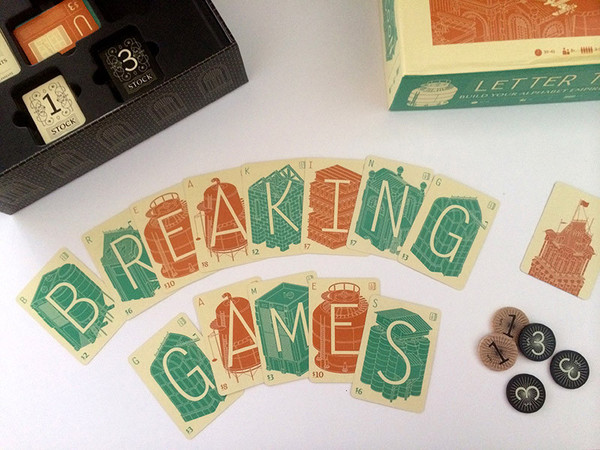
The only reason I started Breaking Games was because clients basically asked us to. Once I played the prototype of Letter Tycoon I knew I had to publish the game. Same thing with POOP, once people kept asking about the little game in the clever brown box over and over I knew I had to publish and promote the game. It was a natural extension of our business model--since we were already attending trade shows--to sell our clients’ games with them.
My dual roles are an interesting question. While I am the manufacturer for some very big games--which I handle personally--I also need to take the time to review and play the games of new designers with staff and oversee the agreements for how we will interact with each designer. Like the rest of my life in general, it is all about balance. I do my best to maintain it.
You've given designers working with Breaking Games booth space at conventions to promote their games, to a greater degree than most other publishers. How does promotion fit into your publishing model?
To me, the designers are rock stars and the games are their songs. The booth is simply the stage we set up for them to play on and demo their masterpieces. We get grassroots feedback and interest for the games, and this helps with the real-world job of educating people about and promoting the games.
Ad Magic focused on making promotional items before expanding into board and card games. How did this transition happen, and what have you learned about pivoting a business into a new line?
The transition happened when, for some unexpected reason, I fell in love with making playing cards and poker chips. Businesses are driven by what people are passionate about. Circles and rectangles were easy to design for, and I loved the simplicity. I came from a world of complex shapes and constantly changing print requirements for different mediums. Our jingle stated things like "from Toilet paper to the Taj Mahal, we can print your logo on it all, paper plastic vinyl leather brass and stone, and even magnetics, glass and rubber and foam, that means we can print your logo on anything..."
So I rebuilt the website to reflect custom playing cards, and suddenly we were number one in Google for "custom playing cards"! The website was awful, but the guys from Cards Against Humanity called and had us print their little Kickstarter :) and that started us down the Kickstarter manufacturing path, which led to card and board games.
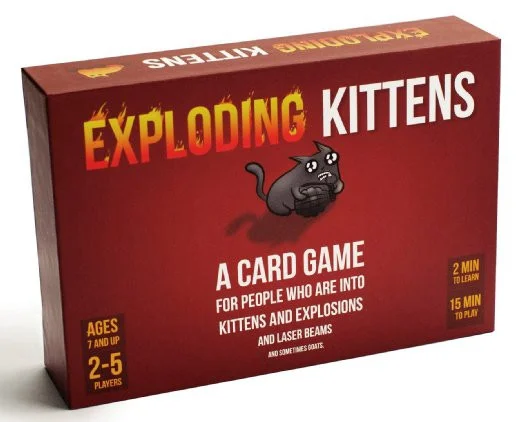
What I have learned about pivoting the business is that you never truly pivot all the way; you take your previous skills with you. And it’s a good thing too, what with making oatmeal packs with cards in them, popsicles and cereal packs with cards in them, bullshit in a box--all of these capabilities came from our background in promotional products. Ironically the items and games are WAY more complicated now. Besides the crazy CAH and Exploding Kittens things, the strategy games and Euro games we are making include all kinds of materials: custom wooden parts, mini and metal pieces and even electronic components. So the effort to make things simpler only went so far, and in the end we are making items that are more complex than ever! Just look at Moonquake Escape, Kings Abbey and Fujian Trader, to name a few!
What do you look for when partnering with designers? Do the requirements change depending on the type of arrangement you make?
I look for equal parts great game and great person. All of our arrangements are custom, just like our products. We are trying to standardize a few things, but for the most part all designers have different needs, and we try to accommodate them as best we can.
Some games are in different stages of development when they come to us. Some are ready to go, they just need a little assistance in bringing the game to cons. Some need a lot more assistance, full art development, rules need to be redeveloped, etc. That is what I mean by custom development.
As far as deals go, the deal is based on the mutual agreement between Breaking Games and the artist in direct relation to what each side brings to the table.
Cardboard Edison Omnibus is supported by our patrons on Patreon.
SENIOR INVENTORS: Steven Cole, John du Bois, Richard Durham, Matthew O’Malley, Isaias Vallejo
JUNIOR INVENTORS: Stephen B Davies, Luis Lara, Behrooz Shahriari, Aidan Short, Jay Treat
ASSOCIATES: Robert Booth, Doug Levandowski, Aaron Lim, Nathan Miller, Marcel Perro
APPRENTICES: Kevin Brusky, Kiva Fecteau, Scott Gottreu, Michael Gray, JR Honeycutt, Scott Martel Jr., Marcus Ross, Diane Sauer