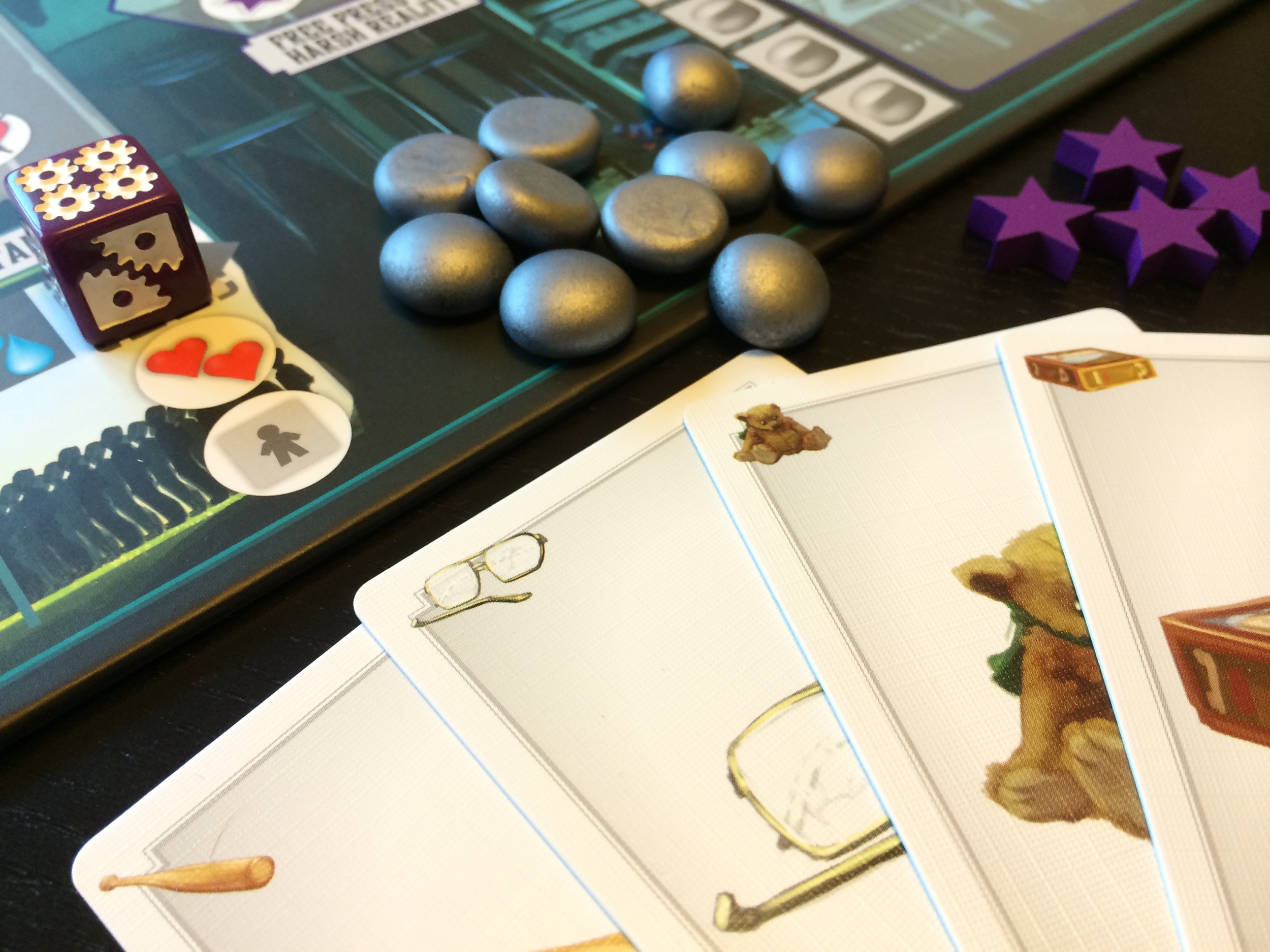
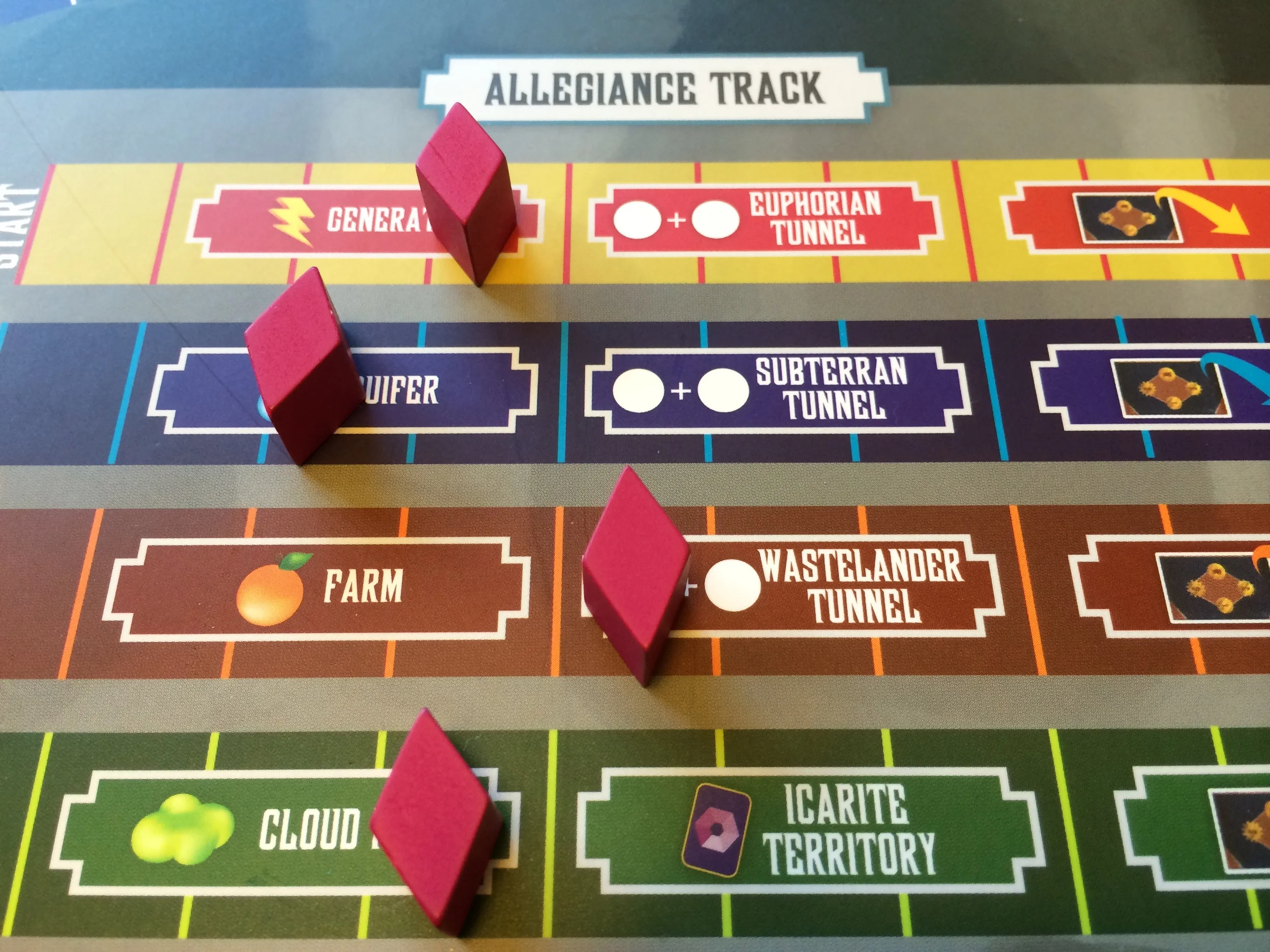
The board in Euphoria is laid out to emphasize the thematic purposes of the worker spots, rather than grouping them by their strategic functions. For example, the commodity-generating areas are found near each associated faction's location, rather than in one place. Why did you choose this type of layout?
Well, mostly out of ignorance. :) I made the mistake of describing the art of the world to my artist and having her illustrate it without any influence from my graphic designer, Christine Bielke. At the time, I thought my graphic designer could just plop the design down onto the art, no problem. As it turns out, it’s a big problem!
That said, even if Christine had been involved earlier in the process, I probably still would have requested that each of the factions be separated into their individual areas, because that’s what the world of Euphoria looks like (or maybe I just can’t see it any other way at this point).
How can designers increase the usability of their games, and when should thematic or strategic considerations take precedence?
Work with your graphic designer to plan the layout of the board before your artist does anything! Learn from my mistake. :) I really think that’s the key, because if you work with your graphic designer, they’ll help you make sure the board is intuitive to players, and then your artist can make it beautiful through thematic illustrations.
Beyond that, study the things other board games do to make actions intuitive (or unintuitive). Players shouldn’t have to remember anything—everything should have a visual cue. For example, in Euphoria, the three types of action spaces have different elements to them to show players the differences between them: One is big and solid (lots of workers can go here), one is square and solid (one worker, can’t be bumped), and one is square with a dotted line and an arrow (one worker, can be bumped).