







“Note what parts of your game initially confuse players, even if they understand them at the end.”
Templates to help with the layout of your sell sheets:
https://mrbossdesign.blogspot.com/2019/05/sell-sheet-templates.html
A small publisher’s advice for running a Kickstarter campaign and attending conventions:
https://giantbrain.co.uk/2019/05/15/meeting-of-minds-janice-turner-wren-games/
Thoughts on narrative in board games:
https://lestmyopinions.com/2019/05/13/waiter-theres-a-narrative-in-my-board-game/
“Every game is its own thing, its own miraculous and impossible creation. It’s a magic trick. It gets easier with time and experience, and you pick up techniques and short-cuts - the craft you can fall back on - but it’s always a process of discovery and iteration and trying things that don’t work until they do. There’s no secret handshake, no special or arcane knowledge.”
How one designer unwittingly found a path to major successes in the industry (audio):
http://breakingintoboardgames.libsyn.com/breaking-into-board-games-episode-93-erica-bouyouris
Some really great insight on designing historical games (audio):
http://www.boardgamedesignlab.com/designing-historical-games-with-tom-butler/
A breakdown of some of the different aspects of your game that you should be testing at different stages:
https://twitter.com/sophisaurus_rex/status/1126420175622934529?s=20
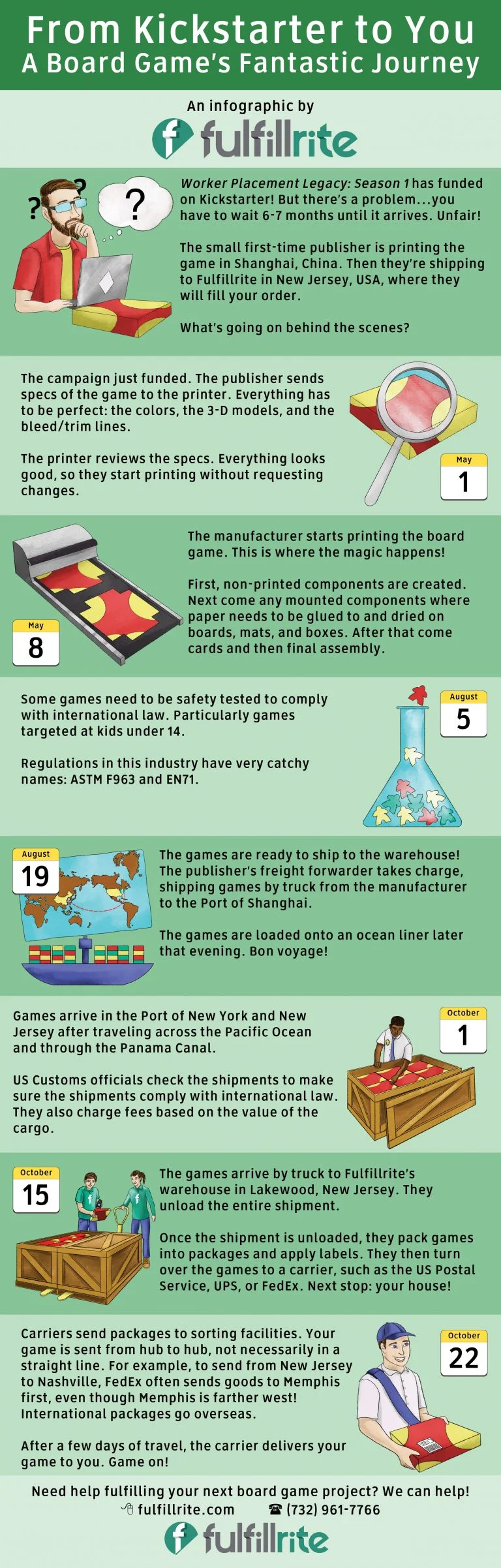
Five ways to build a crowd for your game before launching a Kickstarter (audio):
http://theforbiddenlimb.libsyn.com/top-5-ways-to-build-a-crowd-for-your-game-ep-82
A list of techniques for creating Kickstarter stretch goals:
https://stonemaiergames.com/the-current-state-of-stretch-goals-2019/