







The requirement for the September 2016 24-hour contest is "divorce":
https://boardgamegeek.com/thread/1631567/24-hour-contest-september-2016
Tips & Resources for Board Game Designers
The requirement for the September 2016 24-hour contest is "divorce":
https://boardgamegeek.com/thread/1631567/24-hour-contest-september-2016
5 early steps for a new board game designer:
http://spielpro.com/blog/5-things-every-board-game-designer-should-know/
Considerations when choosing metaphors, such as theme, in your game:
http://makethemplay.com/index.php/2016/09/01/board-game-theme-and-other-metaphors/
“Get to that first playtest. You may have a great idea, but there is a monumental gap between an idea and an actual game.”
This month's roundup of our favorite board game design links includes advice for new small publishers, ways of creating the experience you want in your game, tips for finding a publisher, important things to keep in mind as you design, and more.
featured:
theory:
playtesting:
publishing:
licensing:
“Design pitch tip: “I’ve spent X years developing this game” is a red flag sentence for many reasons. It doesn’t help your pitch.” - Nate Murray
process:
Ways to cope with being overwhelmed or blocked in the game design process (audio)
“You’ll make a game and think you’ve nailed it the first time you write the rules. Then comes the real work, which can be exhausting, discouraging, confusing. But if you believe in your game, don’t be dismayed. Get it in front of people. Playtest it. Toss out what isn’t working, explore new ideas. Make something you love playing, and then enjoy what follows.” - David Somerville
Cardboard Edison is supported by our patrons on Patreon.
ADVISERS: Peter C. Hayward, RetroIn Games, Aaron Vanderbeek
SENIOR INVENTORS: Steven Cole, John du Bois, Richard Durham, Koen Hendrix, Chris and Kathy Keane (The Drs. Keane), Matthew O’Malley, Marcel Perro
JUNIOR INVENTORS: Ryan Abrams, Luis Lara, Behrooz Shahriari, Aidan Short, Jay Treat
ASSOCIATES: Robert Booth, Danica E., Doug Levandowski, Aaron Lim, Nathan Miller, Isaias Vallejo, Matt Wolfe
APPRENTICES: Kevin Brusky, Kiva Fecteau, Scott Gottreu, JR Honeycutt, Knight Works, Scott Martel Jr., Mike Mullins, Marcus Ross, Sean Rumble, Diane Sauer, Smarter Backer
September 2016 Game Design Showdown
Pitch a game with a historical theme that uses marbles
Deadline: Sept. 9, 2016
“When designing, start by aiming for perfect balance, but tastefully depart from it. Concede ground to benefit the game’s core experience.”
“A key tool in developing a mature design is addressing those lingering feelings you have as a player. Isolate and fix those 1% kinks.”
Facts, figures and advice on contracting art for your game:
https://danicaatthetabletop.com/2016/08/31/designer-definitions-working-with-an-artist/
What it's like to be a full-time game designer (audio):
http://onboardgames.libsyn.com/obg-209-i-want-to-be-a-real-designer
Two discussions about player decision-making (audio):
GDoNC: https://www.buzzsprout.com/48513/416181-episode-20-decision-scales
Building the Game: http://www.buildingthegamepodcast.com/2016/08/28/episode-222-decisions-and-weather/
How distribution consolidators work (audio):
http://www.thecompanybard.com/tgc-067-james-takenaka-hitpoint-sales-can-help-get-game-distribution/
How players learn a game--and what that means for game designers:
http://makethemplay.com/index.php/2016/08/25/the-joys-of-learning-a-board-game/
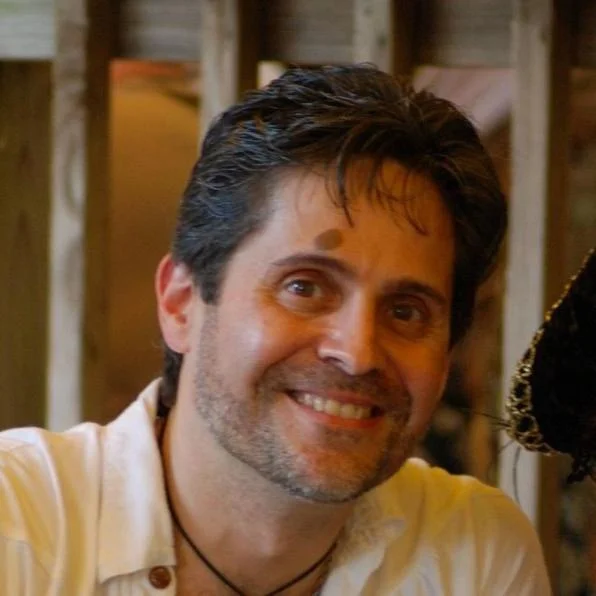
In this installment of The Publishers, we speak with Stephen Buonocore of Stronghold Games about breaking into the industry, identifying great games, working with big-name designers, overseas partnerships and more. This interview was conducted at Metatopia 2015. It has been edited for clarity and length.
Stronghold Games got a foothold in the industry by doing reprints and by licensing games from outside of North America. Do publishers need some kind of angle to break into the industry?
It certainly was the way that we did it. Once we got past that beginning phase, we then said, OK, now we've established ourselves, now we'll go out and start looking for other things.
Do companies now need a hook? I think companies now need to bring out great games. I'll mention Kickstarter. Now you have a vehicle there so you can get the publicity that is invaluable. Not only can you get the capital that's invaluable--and let me tell you, that's really important--but you get publicity that's invaluable too.
Everybody really needs to be bringing out games that excel in some way. There are just too many games coming out--and I'm as responsible as anybody! But we need to focus on what are truly great games, and if you're bringing out great games, the gamers will find you, especially with a vehicle with a built-in marketing capability like Kickstarter.
How can a publisher identify a great game?
That's the secret sauce. I always ask any designer who pitches me a game, or when I'm evaluating an already-published game from overseas, why should this game be published? What's the game doing in our space that sets it apart? And if there's not something new going on here, if you're just turning red cubes into green cubes and putting them on the other side of the board, that sounds like something that's been done a few times, or a few hundred times. So you need to find games that have a uniqueness to them.
Beyond that, it's gut feel. There's no way of throwing the ingredients into a pot and then boom, there's your great game. You're going to need to use your experience as a gamer, then test it with gamers and get feedback.
How does it excel in one of three ways: thematically, mechanically or, my own word, funtastically? If you can say this game does it better or more uniquely than anything else in one of those categories, then we've got something we can start talking about.
How big a factor is it for a designer to have a reputation in the industry, if they're looking to build relationships with a publisher? Is it a big deal from a publisher's perspective to get a "name" designer?
I think the answer's going to change depending on who you speak to, but for me it is. It is a big deal. I think that games by known designers have an automatic sell. You're going to get the BoardGameGeek crowd to immediately latch onto a Stefan Feld game.
Having said that, that's the catch-22. You need experience to get a job, but you can't get a job unless you have experience, right? How do you do it?
A designer should try to crack in any way he can and get that first published game. But even if you can't do that, make as many relationships as you can because this industry, as much or more than any other, is about relationships. You get to know publishers, you get to network with them at conventions, people get to know you, so yeah, I think it is very important. Getting over that first hurdle of getting a game published is always going to be hard, but getting known in general in the industry is certainly going to serve you very well.
You've been striking up partnerships with a lot of other publishers, especially from overseas. How did you get into that approach?
I'm a relationship kind of guy. There was an opportunity to look toward these publishers out in Europe that just don't have distribution--they just distribute in Europe--and to meet up with them when we're in Essen or when we're at The Gathering of Friends, strike up a relationship, make them want to work with you. I want to strike up those relationships, because relationships are what make business grow. Doing that, going out and then looking at their lineup, certainly their new stuff and saying, hey, I'll get it out to a bigger audience--and for the most part most publishers want to see that happen. All publishers want to see their games find a bigger audience, and of course they get some extra money when that happens as well.
If a small publisher wanted to form those kinds of relationships, what piece of advice that would you have for them?
It's similar to finding designers to work with. Put yourself in a position to meet those other publishers. So for European or Japanese publishers, you should be at Essen. And you need to make appointments with them beforehand. Nobody takes a meeting if you just walk up and say, hey Asmodee, I want to take a meeting with you. It's not happening. You have to tell them what you're about beforehand and then try to get the meeting there. Having a catalog behind you, having a certain amount of sales behind you, is going to help. They better know who you are or they might not do that.
Again, it's a catch-22. You have to get a catalog, you have to get known a little bit. I wasn't taking these meetings from day one, but two years into this I could meet with almost anybody in the industry. So keep working on it, keep building your catalog, building your relationships, bringing out great games, and that effect, hopefully if you're doing it right, will snowball into bigger things for you.
Stronghold Games' 2017 release schedule features title including The Dragon & Flagon, Terraforming Mars, Great Western Trail, La Granja: The Dice Game - No Siesta!, Sola Fide: The Reformation and Fabled Fruit.
Cardboard Edison is supported by our patrons on Patreon.
ADVISERS: Peter C. Hayward, Aaron Vanderbeek
SENIOR INVENTORS: Steven Cole, John du Bois, Richard Durham, Koen Hendrix, Chris and Kathy Keane (The Drs. Keane), Matthew O’Malley, Marcel Perro
JUNIOR INVENTORS: Ryan Abrams, Luis Lara, Behrooz Shahriari, Aidan Short, Jay Treat
ASSOCIATES: Robert Booth, Danica E., Doug Levandowski, Aaron Lim, Nathan Miller, Isaias Vallejo, Matt Wolfe
APPRENTICES: Kevin Brusky, Kiva Fecteau, Scott Gottreu, JR Honeycutt, Knight Works, Scott Martel Jr., Mike Mullins, Marcus Ross, Sean Rumble, Diane Sauer, Smarter Backer
Various ways of using modular design to add replayability:
http://coalitiongames.com/wordpress/2016/08/25/a-primer-for-modular-game-design/
Daryl Andrews on managing multiple projects, paying attention during playtesting, pitching to publishers and more (audio):
http://cardboardarchitects.libsyn.com/designer-interview-daryl-andrews
Ways to cope with being overwhelmed or blocked in the game design process (audio):
“Design pitch tip: “I’ve spent X years developing this game” is a red flag sentence for many reasons. It doesn’t help your pitch.”
“You’ll make a game and think you’ve nailed it the first time you write the rules. Then comes the real work, which can be exhausting, discouraging, confusing. But if you believe in your game, don’t be dismayed. Get it in front of people. Playtest it. Toss out what isn’t working, explore new ideas. Make something you love playing, and then enjoy what follows.”
The Bamboozle Brothers discuss their co-designing process on Ludology (audio):
http://ludology.libsyn.com/ludology-episode-134-theres-no-i-in-team