How can a designer know if their game would be better as a real-time game or turn-based?
I think the trick is to figure out which works better for the theme, and follow up with how you want the players to feel while playing.
First, the theme. Some themes just cry out to be real-time. Operation is great fun for kids, but if you add a timer, suddenly you have a real-time game that works perfectly thematically and could even appeal to adults.
But I find that real-time adds either excitement and fun or stress and frustration. I think the game itself needs to be relatively simple, and usually pretty short, so players don’t feel too invested in the outcome. Then they can laugh when they make a mistake and won’t take it too seriously. A two-hour real-time game in which people have invested a lot of effort would probably be mostly stressful and frustrating.
Looking at real-time video games, you have platformers and FPS-style games, in which you are obviously engaging in a challenge of dexterity and speed. I can get into playing those.
On the other end of real-time video games, you have RTS games, which I never did enjoy. I find that in those larger-scale strategy games, I would much rather be able to take the time I need to think and consider my options, then make a decision, so in my opinion turn-based games work much better for that.
Is speed an essential aspect of real-time games, and are there ways to make speed a less-important skill for players in a real-time game?
I want to tag in Josh Tempkin to answer this! He’s done so much research into real-time games and has a whole set of real-time mechanics with the pros and cons of each at his fingertips.
I suspect that speed is a requisite skill in real-time games, but there are definitely ways to mitigate it. I think they all involve ways of giving players a minimum amount of time, or delaying or obfuscating things so that sometimes the quickest choice is not always the best.
Take Codenames, for example. Not a real-time game, but the Assassin element is something that could be added to a real-time game to slow things down a bit. You can make your decisions more quickly than your opponents? In most real-time games, you’ll win. But what if you also need to be able to notice something else (like the Assassin) or you’ll lose outright?
How did you pick the theme of a waitstaff racing to earn tips? Did you ever consider alternatives?
That was the theme pretty much from the beginning. Since I was aware of the publisher at the beginning of the design process (because it was for the Dice Hate Me Games contest), that gave me a lot of direction for the theme. I’d played other Dice Hate Me games and I knew Chris Kirkman’s design aesthetic, which seemed to me like early to middle 20th-century Americana. I also listened to the Dice Hate Me podcast pretty regularly, and several times in the previous months the crew mentioned going to diners.
That plus the fact that the Silver Diner is one of my kids’ and my favorites, and we regularly go to Tastee Diner for game nights… Those diners have an amazing aesthetic appeal and are just fun places to go, so once the theme occurred to me I looked no further.
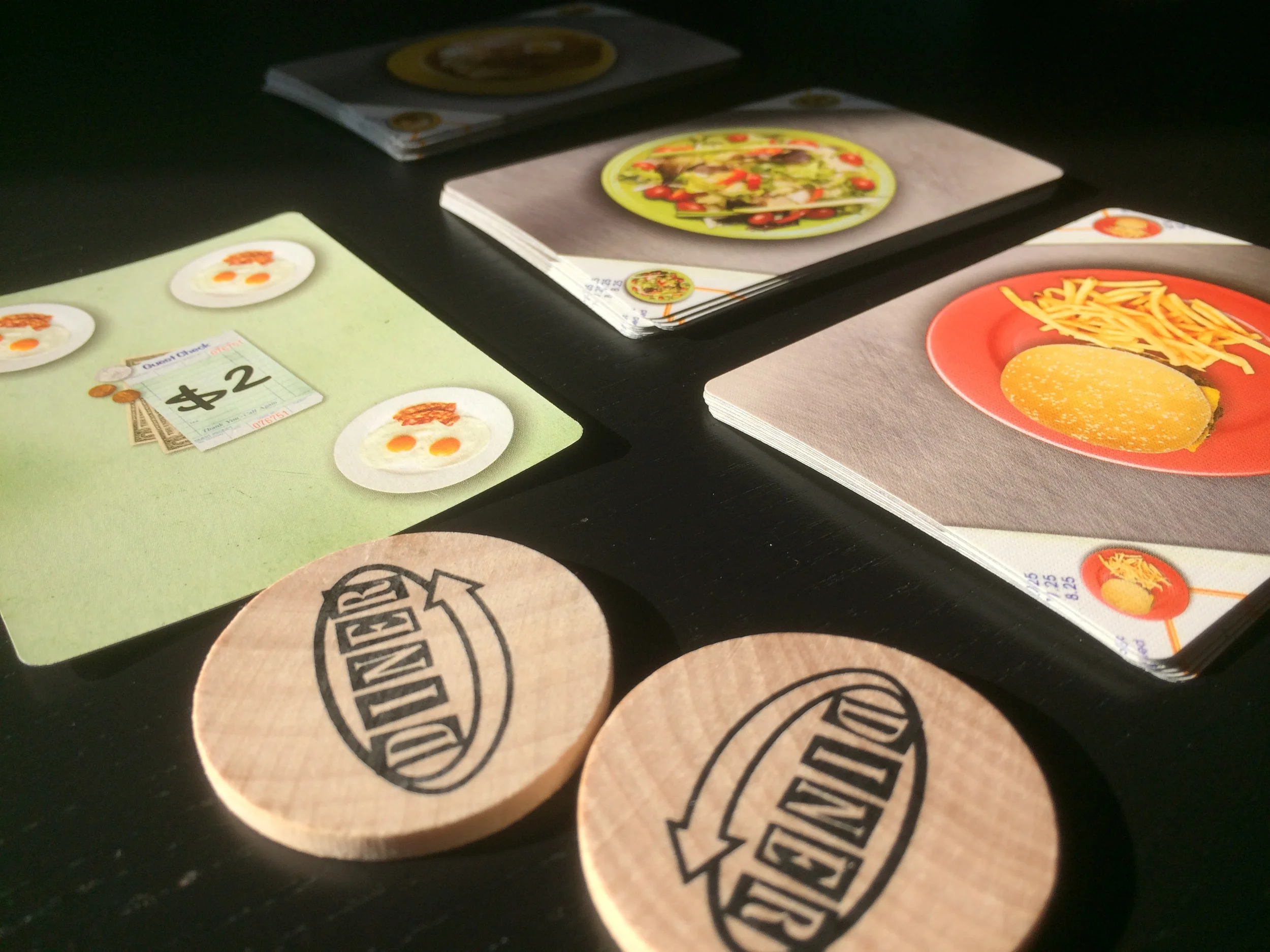
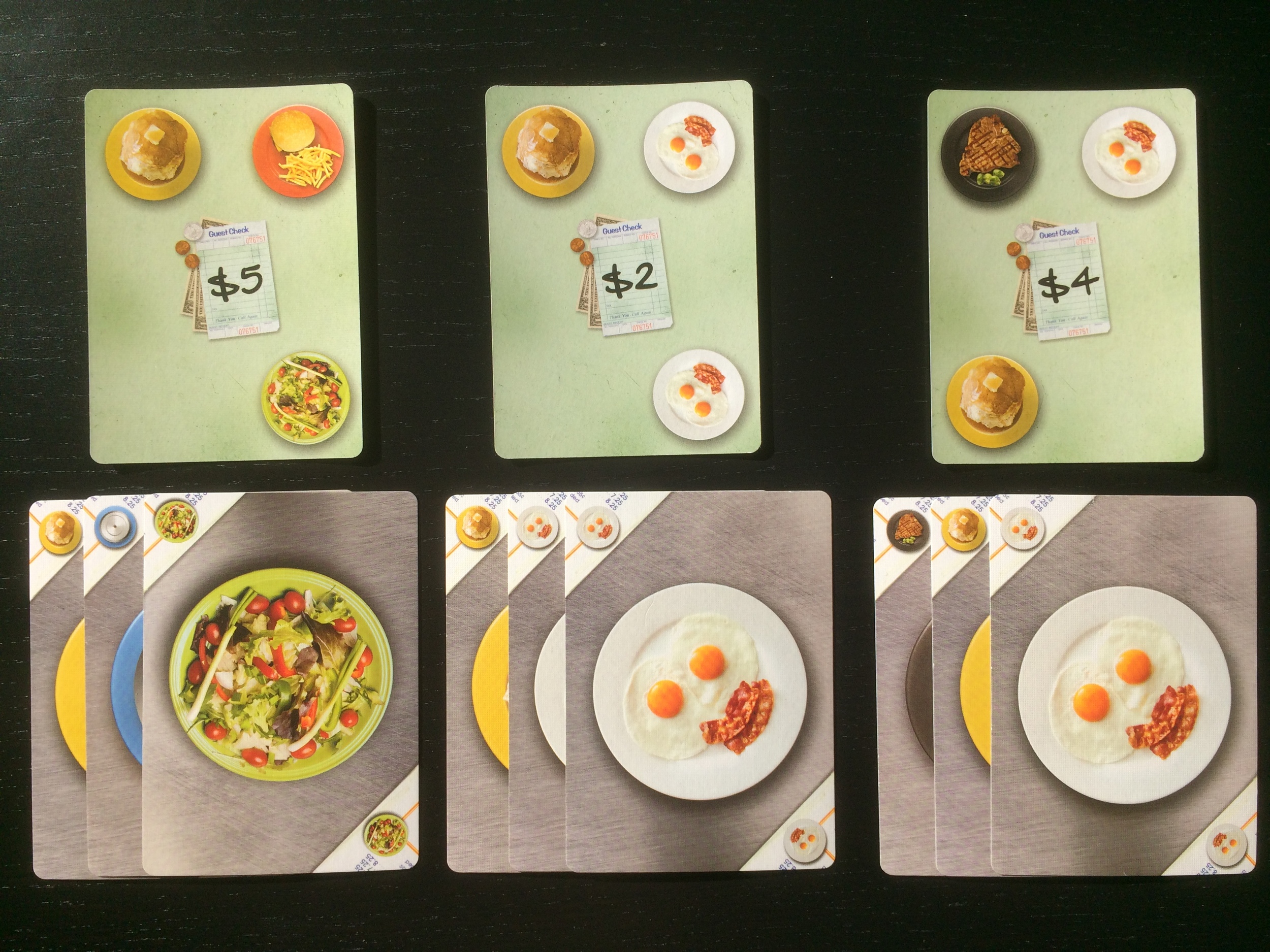
The theme also led to some other nice little elements of the game, such as calling out your orders when you deliver them: “Burger, Burger, Pancakes!” It has very little mechanical impact on the game other than letting other players check your order, but it adds theme and excitement and helps the game draw a crowd at conventions.