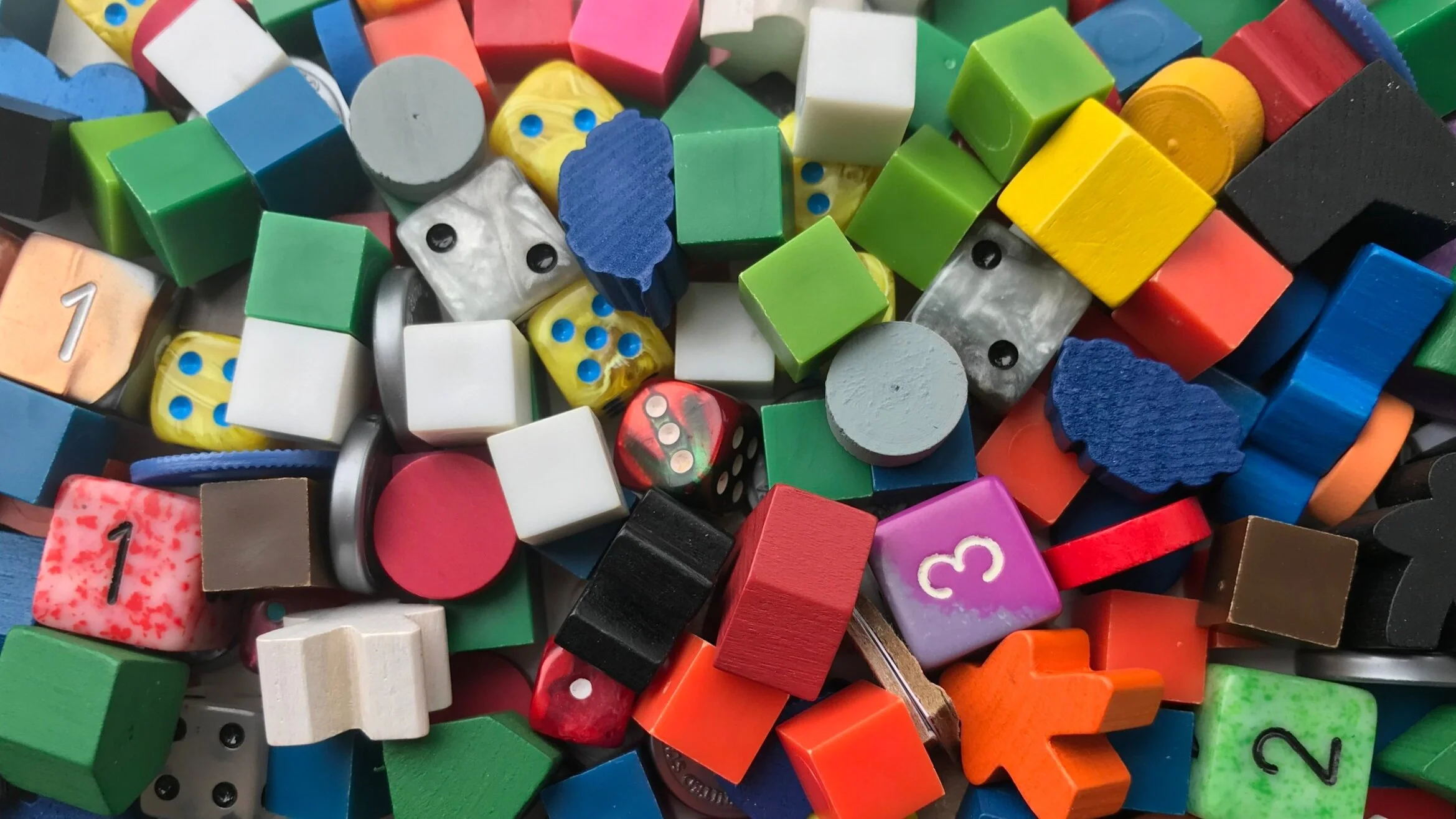







Pros and cons of dice vs. cards:
http://www.leagueofgamemakers.com/mechanics-face-off-dice-vs-cards/
Tips & Resources for Board Game Designers
Pros and cons of dice vs. cards:
http://www.leagueofgamemakers.com/mechanics-face-off-dice-vs-cards/
On Board Games (@OnBoardGames) discusses marketing games with Game Salute (@GameSalute):
http://onboardgames.libsyn.com/obg-155-that-chocolate-cake-looks-amazing
What not to say in a pitch email:
http://www.wiltgren.com/2015/04/08/submitting-103-never-ever-do-this-3/
“It’s important to not only play a lot of games, but to play a different assortment of games. Even ones you may not like. Each game you play is an opportunity to learn something new.”
Isaias Vallejo (@vallejoisaias) on the hardest part of being a designer, learning by playing, demoing your game and more:
http://meeplemechanic.com/foxhole-fiver/isaias-vallejo-on-designing-valeria-card-kingdoms/
Tools to mitigate the effects of randomness:
http://lawofgamedesign.com/2015/04/06/theory-mitigating-randomness
Notes on several U.S. fulfillment partners:
http://stonemaiergames.com/4-crowdfunding-fulfillment-shipping-partners-in-the-us/
“Fear is good, because it comes from a place of caring. If your game design does not cause you fear, you probably don’t care enough.”
How to learn to accept playtesters’ feedback:
http://www.leagueofgamemakers.com/the-stages-of-playtesting/
Lessons learned from the successful Bad Medicine Kickstarter campaign: games vs. products, engaging backers, promoting the campaign and more:
http://gil.hova.net/2015/04/06/bad-medicine-kickstarter-postmortem/
“If you ignore all feedback and advice, you will fail. If you twist and contort your designs to follow all feedback, you will fail. Listen to your advisors, and weigh their words of wisdom. But you have to make the final decisions, you have to provide the vision.”
9 things to consider putting in your licensing contract:
http://theforbiddenlimb.com/2015/04/03/top-9-designer-considerations-for-publishing-contracts/
A thorough rundown of do’s and don’ts for playtesting at the early, mid and late stages:
http://whoseturnisitanyway.com/design-playtest-playtest-playtest/
“Most game designers have an original idea they’d like to flesh out; I’d encourage you to do that, but if you’re first to market with it, present it well. A great game mechanic, no matter how unique it is, will not sell well if the game that’s wrapped around it sucks.”
12 things that should be in your initial email pitch to a publisher:
http://www.wiltgren.com/2015/04/03/submitting-102-12-things-to-remember-in-your-short-sweet-pitch/
Board Game Design Forum’s April 2015 Game Design Showdown
Pitch a game to be played between games, where players can drop in and out at will
Deadline: April 9, 2015
Preparing yourself for the emotional roller coaster of running a Kickstarter campaign:
http://www.leagueofgamemakers.com/the-kickstarter-emotional-roller-coaster/
KublaCon Game Design Contest
Deadline: submissions must be received via mail by April 24, 2015
http://kublacon.info/kcindex.lasso?page=detail&RD=006441&action=pubsearch&skip=0
“Sometimes you have to cut your favorite mechanism from a game to make it better. Use it in a different design, new scenery may help.”
This month’s roundup of useful board game design links features practical advice for making board games a sustainable endeavor, important reminders about playtesting, notes on a taboo game mechanism and more.
industry:
publishing:
playtesting:
process:
theory:
Cardboard Edison is supported by our patrons on Patreon.
SENIOR INVENTORS: Steven Cole, Richard Durham, Jeff Johnston, Matthew O’Malley, Isaias Vallejo
JUNIOR INVENTORS: Stephen B Davies, Luis Lara, Behrooz Shahriari, Aidan Short, Jay Treat
ASSOCIATES: Robert Booth, Zachery Cook, Doug Levandowski, Nathan Miller, Marcel Perro
APPRENTICE: Gino Brancazio, JR Honeycutt, Brad Price