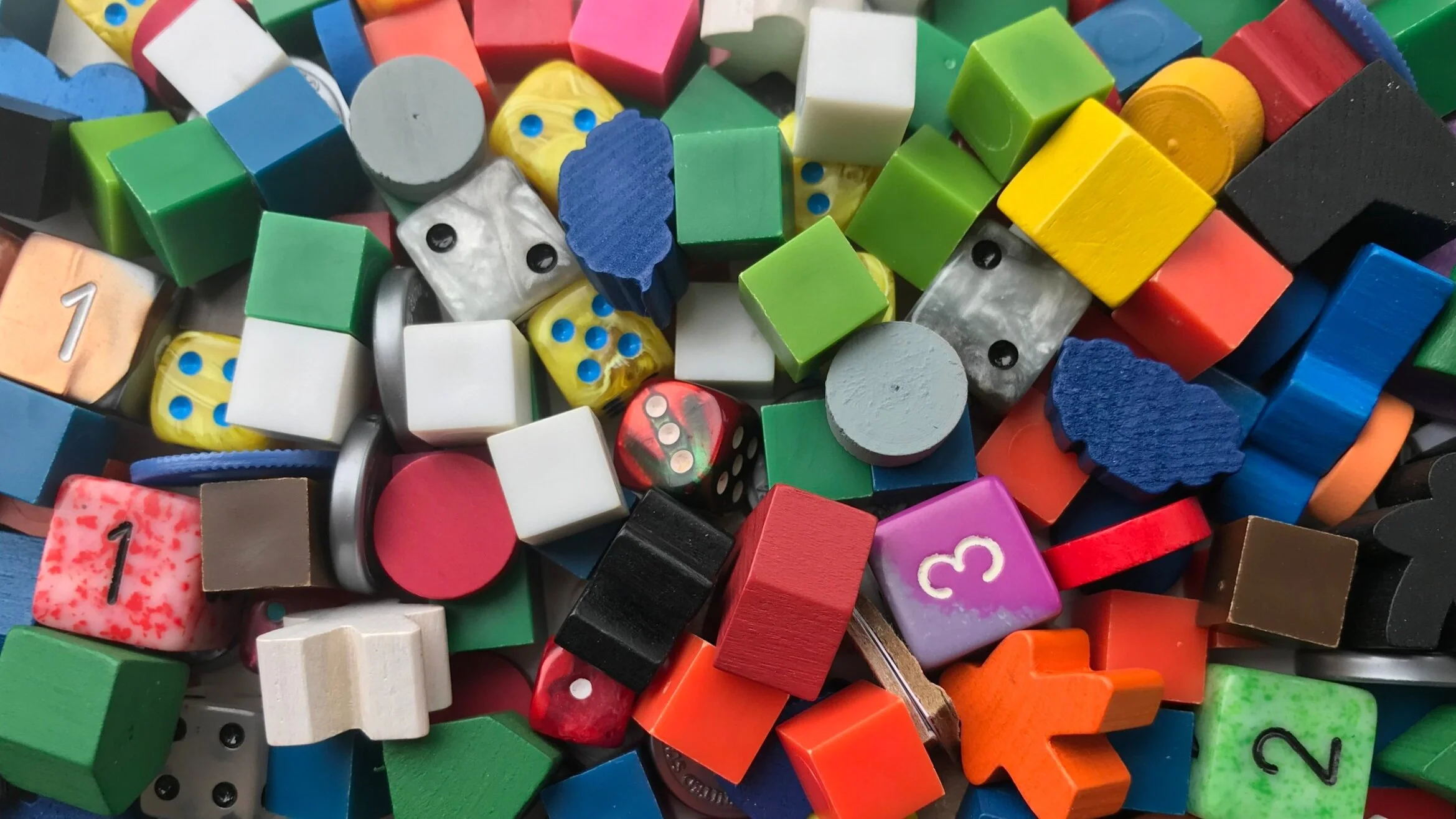







Designing a custom dice game but not sure how to make the prototype?
indentedblankdice.com
Tips & Resources for Board Game Designers
Designing a custom dice game but not sure how to make the prototype?
indentedblankdice.com
“First know what to say, then work out how to say it: Words without message are mere noise. Design without content is mere decoration.”
“Spend some time creating games just for the fun of it before you decide it’s the right choice to make it into a business venture.”
“When designing #boardgames, sometimes you just have to throw out the theme and do something else.”
The Ludology podcast takes a look at the use of uncertainty and randomness in games:
http://ludology.libsyn.com/webpage/ludology-episode-34-the-good-the-bad-and-the-random
SEE ALSO:
Luck and games, on the Dice Hate Me podcast:
http://cardboardedison.tumblr.com/post/19635270677/luck-and-games-danielsolis-chats-with
“If you try to design for EVERYONE, you end up designing something that makes EVERYONE unhappy.”
“This industry is a revolving door. I talked to retailers turned distributors turned designer turned publisher – and the other way around. Everyone dabbles.”
The Plaid Hat Games guys discuss what drives them to design games:
“The best expansions test the limits of a game’s existing nature, rebalancing existing elements, rather than reconstituting the game more completely.”
Sample game licensing contract, courtesy of Tom Jolly:
Free, simple, intuitive graphic symbols for every occasion, courtesy of The Noun Project:
Once a month, we round up our favorite new pieces of advice and resources for board game designers. Here are our picks for May 2012:
“For me, the challenge that board-game design sets before me is to make games that are engaging but streamlined, complex but not complicated: games with high “simplexity.””
Tips from a playtester for creating intuitive prototypes and clear rules:
http://boardgamegeek.com/thread/812173/a-few-thoughts-on-game-design
Designer Diaries on BoardGameGeek are a great resource for new game inventors. They show how published games were conceived, developed and ultimately licensed or self-published. Along the way, the designers often share some lessons they learned through the process.
You can read every BoardGameGeek Designer Diary here:
Some suggestions for ways to limit the options in your game without curtailing its depth:
http://hyperbolegames.com/2012/06/04/limit-em-good/
SEE ALSO:
Make a Better Game – Limit the Player
http://cardboardedison.tumblr.com/post/20876510726/make-a-better-game-limit-the-player-presenting
Bruno Faidutti’s answers to some of the most common questions from new game designers:
How can I protect my idea and be sure some dishonest game publisher won’t steal it?
Is it useful to pay a professional artist to make a nice looking mock-up of my game?
How can I get in touch with publishers?
Can I submit the same game to more than one publisher?
The publisher wants to give me XX% of his gross sales price. Is it fair?
The publisher wants to change everything, it’s not may game anymore… What can I do?
“No matter how “finished” you think your game is, feedback from a publisher can lead to important improvements even if they ultimately take a pass.”
“Make the prototype quickly from anything you can find. Once you have a game, improve the prototype enough to interest playtesters. Once you get a finely-tuned game, make it shine.”
Can you design a game in 24 hours? If so, there’s a contest for you: